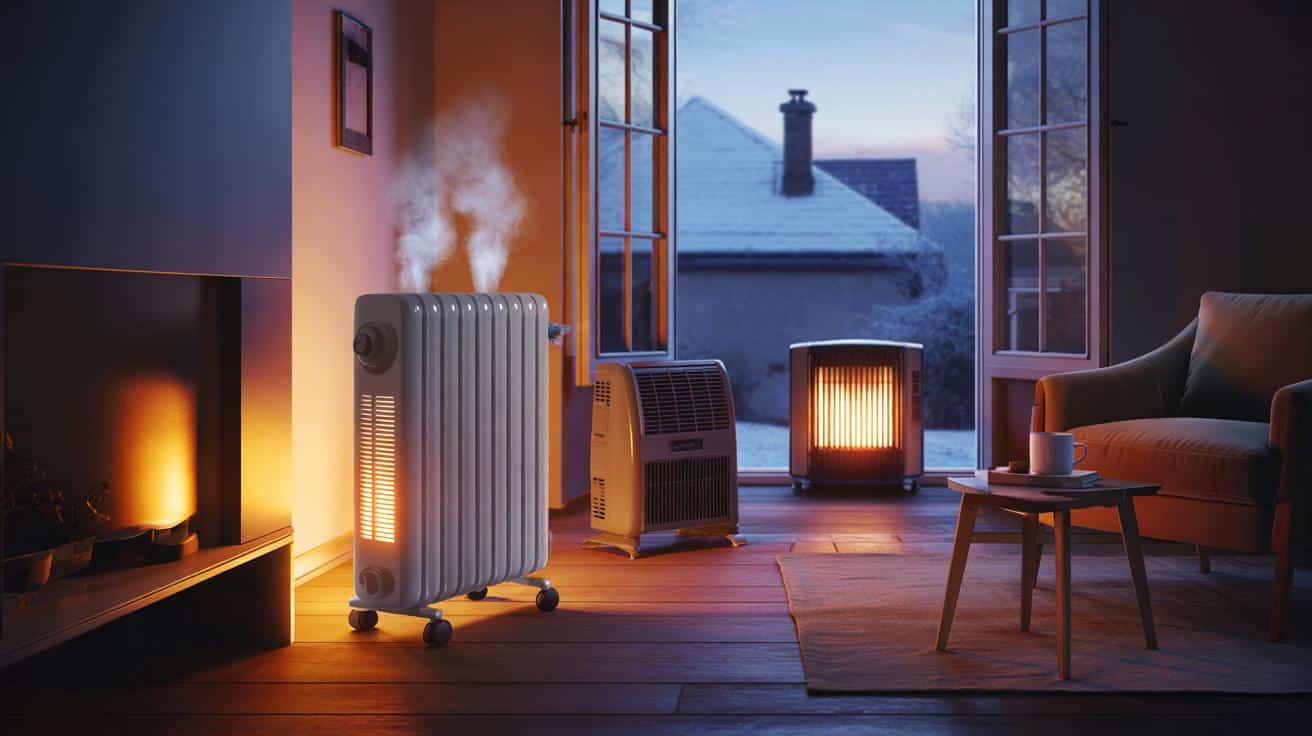
Instead of cranking up the whole central heating system, a portable heater can target the space where you live, work or sleep the most. But not all devices are equal when it comes to comfort, safety and the impact on your energy bill.
Why people are betting on backup heating
A space heater is meant to support your main heating system, not replace it entirely. Used well, it can cut costs without sacrificing comfort.
- You heat only the room you are actually using.
- Many models warm up quickly, giving instant relief.
- For renters or people in older homes, it can be a flexible way to stay warm.
A good backup heater is less about raw power and more about steady, controlled warmth with reasonable running costs.
The challenge is that the market is crowded: fan heaters, convectors, radiant panels, oil‑filled radiators, gas and paraffin stoves. Each looks similar on the box, yet they behave very differently once plugged in at home.
The main types of space heaters on the market
Fan heaters: fast heat, fast bill
Fan heaters are the classic small white box you throw in a chilly bathroom or under a desk. A metal element heats up and a fan blows hot air into the room.
- Pros:
- Very quick to heat a small space.
- Cheap to buy and easy to move.
- Useful for very short, targeted use.
- Cons:
- High electricity consumption when left on.
- Noticeable noise from the fan.
- Hot air cools down quickly once switched off.
They make sense for a five‑minute warm‑up while you shower, or to defrost a tiny room. For anything longer, they start eating into your budget.
Electric convectors: the simple all‑rounder
Convectors heat the air that circulates naturally through the appliance, then let it rise back into the room. They are often wall‑mounted or placed on simple feet.
- Pros:
- Easy to install and use.
- Provide a comfortable, fairly even temperature.
- Often come with a thermostat and timer.
- Cons:
- Slower to heat than a fan heater.
- Energy use can still be significant if on for hours.
- Lose efficiency in badly insulated rooms.
They suit a bedroom or living room used a few hours a day. With a good thermostat, they avoid overheating the space, which helps avoid nasty surprises on your bill.
Radiant panels: targeted warmth that feels like sunlight
Radiant or infrared panels heat objects and people directly rather than just the air. You feel it as a soft, enveloping warmth, similar to standing in the sun near a window.
➡️ “I’m 65 and felt tired after short walks”: the breathing pattern that limited endurance
➡️ Saildrone, Lockheed to place missile launchers on naval drones
➡️ Help birds survive the coldest nights: this is the one food that brings their warmth back
➡️ These major cities are sinking: why their disappearance now looks inevitable
➡️ U.S. Navy completes first Los Angeles-class fast attack submarine refueling overhaul
➡️ The day I built a self-watering system from rubbish I never thought I’d keep
➡️ Germany pressing Belgium on frozen Russian assets
- Pros:
- Pleasant, stable comfort without stuffy air.
- Can be energy‑efficient in a well‑insulated room.
- Often slim and discreet, easy to integrate into decor.
- Cons:
- Higher upfront cost than basic electric heaters.
- Performance drops in draughty or poorly insulated spaces.
- Not as instant as a fan heater for a burst of heat.
Radiant panels shine in small, well‑sealed rooms where you want constant, gentle heat without constantly fiddling with controls.
Oil‑filled radiators: slow but steady winners
Oil‑filled radiators look like traditional radiators on wheels. An electric element heats a sealed oil reservoir, which then releases warmth gradually through the metal fins.
- Pros:
- Very quiet, almost silent in use.
- Heat lingers for a while even after you turn it off.
- Well suited to long sessions in a single room.
- Cons:
- Take time to reach full temperature.
- Bulky and heavier to move around.
- More expensive than basic fan heaters.
This is where long‑term comfort and energy savings start to align. Because the oil stores heat, the heater does not need to run constantly at full power.
Gas and paraffin heaters: power with strings attached
Freestanding gas or paraffin stoves run on bottled gas or liquid fuel. They are often used in outbuildings, workshops or holiday homes where electric heating is limited or too costly.
- Pros:
- Strong heating power, even in poorly insulated rooms.
- Can work without mains electricity.
- Quick to bring a cold space up to temperature.
- Cons:
- Need regular maintenance and careful handling.
- Produce combustion gases: ventilation is non‑negotiable.
- Ongoing cost of fuel can fluctuate with market prices.
They are tools for specific situations rather than everyday living rooms. Safety rules must be followed strictly: carbon monoxide detectors, fresh air, and proper storage of fuel.
How the main heaters compare at a glance
| Heater type | Warm‑up speed | Comfort level | Energy use | Typical price | Best use case |
|---|---|---|---|---|---|
| Fan heater | Very fast | Basic | High | Low | Very short use in a small room |
| Electric convector | Moderate | Good | Medium to high | Affordable | Occasional use in a medium room |
| Radiant panel | Moderate | Very good | Reasonable in insulated space | Mid to high | Gentle, steady heat in a well‑insulated room |
| Oil‑filled radiator | Slow | Excellent | Efficient over longer periods | Mid‑range | Long‑lasting warmth in a closed room |
| Gas/paraffin stove | Fast | Good | Medium to high | Variable | Workshops, cabins, poorly insulated areas |
So which space heater really balances efficiency and savings?
When you look beyond the marketing claims, two types repeatedly stand out for a mix of comfort and long‑term control over costs: radiant panels and oil‑filled radiators.
For regular use in a single room, oil‑filled radiators and radiant panels tend to offer the best balance between cosy heat and restrained energy bills.
They are not the cheapest to buy, but they reward patients users. Instead of sharp bursts of hot air, you get even warmth that allows the thermostat to work more intelligently.
Why insulation and room size change everything
The “best” heater on paper can be a poor choice in a draughty bedroom or a huge open‑plan living room. A few rules help guide the decision:
- Small, well‑insulated room: radiant panel or oil‑filled radiator, used with a thermostat and timer.
- Bathroom or tiny office: fan heater, but only for short spells.
- Medium living room: convector or radiant panel, ideally supported by decent insulation and draft proofing.
- Garage, shed, temporary workspace: gas or paraffin heater, with strict attention to ventilation and detectors.
Insulation is the invisible partner of any space heater. A modest heater in a sealed room often beats a powerful one battling constant cold drafts.
Reading the label: a quick guide for shoppers
When you stand in front of a wall of heaters in a store, three pieces of data matter more than the rest.
- Power rating (watts): around 1,000–1,500 W for a small room, 2,000 W or more for larger spaces, assuming decent insulation.
- Thermostat and timer: these avoid constant full‑power running and let you pre‑heat a room before use.
- Safety features: overheat protection, tip‑over cut‑off, and for gas or paraffin, clear safety certifications.
A cheaper heater running flat‑out for hours can end up costing far more than a slightly pricier model that cycles on and off sensibly.
Real‑life scenarios: how different choices play out
Take a home worker in a two‑bed flat. They spend eight hours a day in a small office. Running the full central heating for the entire property all day quickly adds up. An oil‑filled radiator, set at a moderate temperature, can keep that one room comfortable while the rest of the flat stays cooler. Over a winter, that targeted approach often outweighs the higher purchase cost.
Now picture a family in a leaky, older house. Radiant panels or convectors will struggle if cold air whips under the doors and around the windows. In that case, a mix of basic draft‑proofing, thicker curtains and a more powerful, possibly gas‑based heater in the most used room can be a more realistic path to comfort.
Key concepts: inertia, comfort and hidden risks
One word shows up often in heating discussions: thermal inertia. It describes how long a heater keeps releasing warmth after the power cuts. Oil‑filled radiators have high inertia, while fan heaters have almost none. High inertia usually means smoother temperature curves and fewer on‑off cycles, which is good for both comfort and consumption.
There is also the notion of perceived comfort. Two rooms at the same temperature can feel very different. Dry, moving air from a fan can feel harsher than the gentle radiation from an oil‑filled or infrared unit. That perception can push people to turn the thermostat higher than they truly need, adding yet more cost.
Any heater also carries some level of risk. Cheap fan heaters can overheat if blocked. Gas and paraffin units pose a carbon monoxide risk if misused. Long cables running across rooms bring a trip hazard. Buying a certified model, reading the manual once, and checking smoke and CO alarms gives a much safer winter.