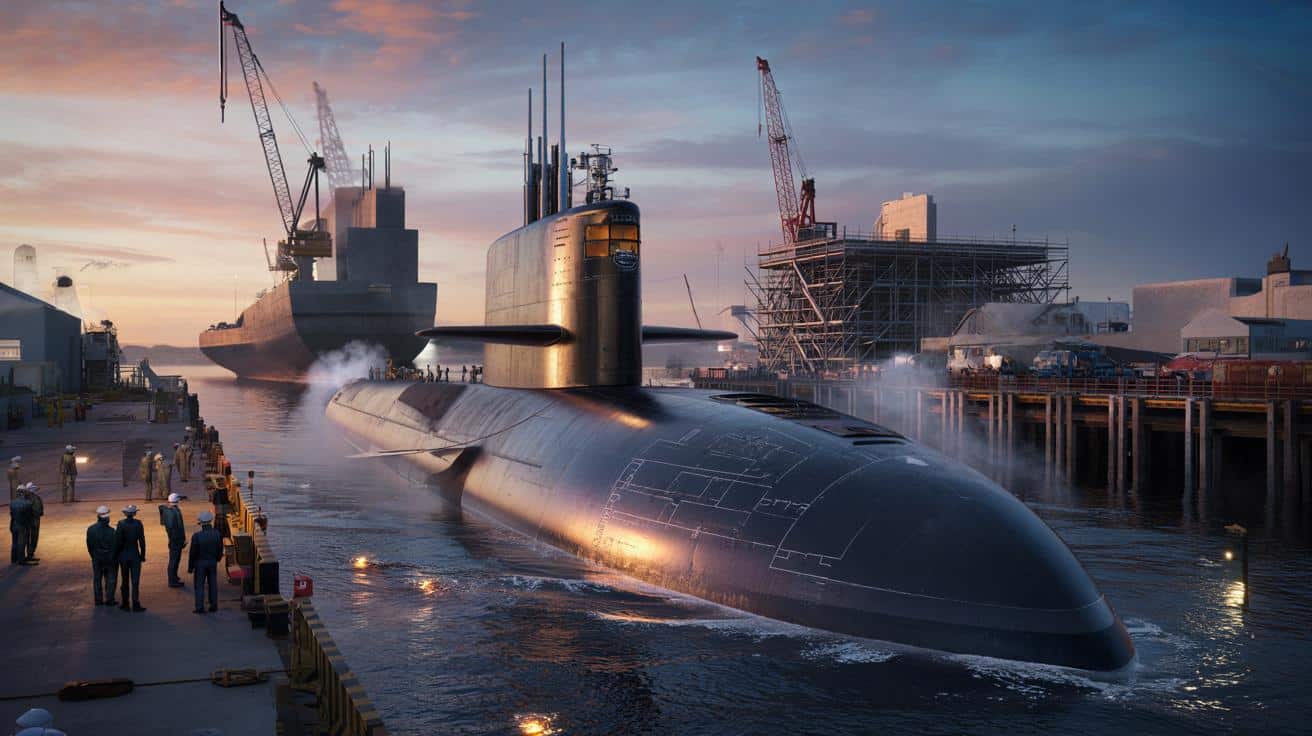
After years in dry dock, the nuclear-powered attack submarine USS Cheyenne has sailed again, carrying new fuel, upgraded systems, and a fresh role in the U.S. Navy’s long-term undersea strategy.
A landmark refit for a Cold War thoroughbred
USS Cheyenne (SSN 773), the last-built boat of the Los Angeles-class, has become the first submarine to complete a Service Life Extension Program (SLEP) refueling overhaul. The work, carried out at Portsmouth Naval Shipyard in Kittery, Maine, restores the submarine’s nuclear core and adds a decade or more of operational life.
The overhaul gives Cheyenne a projected service span of more than 44 years, stretching far beyond what was originally planned when she was commissioned in the mid-1990s. The submarine left the shipyard in December 2025 for post-overhaul sea trials, returning to a fleet that is under intense pressure to meet global demands.
Cheyenne’s SLEP overhaul effectively “restarts the clock” on one of the Navy’s most capable and battle-proven attack submarines, at far lower cost than building a new boat.
Why this single submarine matters to the entire fleet
Los Angeles-class submarines, often referred to as “688s” inside the Navy, were the backbone of American undersea power for decades. Designed at the height of the Cold War to track and, if needed, destroy Soviet submarines, they remain fast, quiet and lethal.
Of the 62 Los Angeles-class submarines built between 1972 and 1996, only about 28 are still active. Newer Virginia-class submarines are gradually taking over, but US shipyards face capacity limits and scheduling delays, leaving a gap between ageing boats and incoming replacements.
That shortfall is felt most sharply in contested regions such as the South China Sea, the North Atlantic and the Arctic, where demand for stealthy, long-endurance submarines continues to climb. Refueling and upgrading selected Los Angeles-class hulls gives the Navy a way to keep numbers up while it waits for the industrial base to catch up.
From temporary fix to long-term tool
The SLEP program is designed as more than a patch job. With Cheyenne as the first example, the Navy aims to create a repeatable template for extending the life of other attack submarines while modernising them for current threats.
Instead of retiring older boats and accepting a capability dip, the Navy is choosing to refresh them, buying time until new-build programs stabilise.
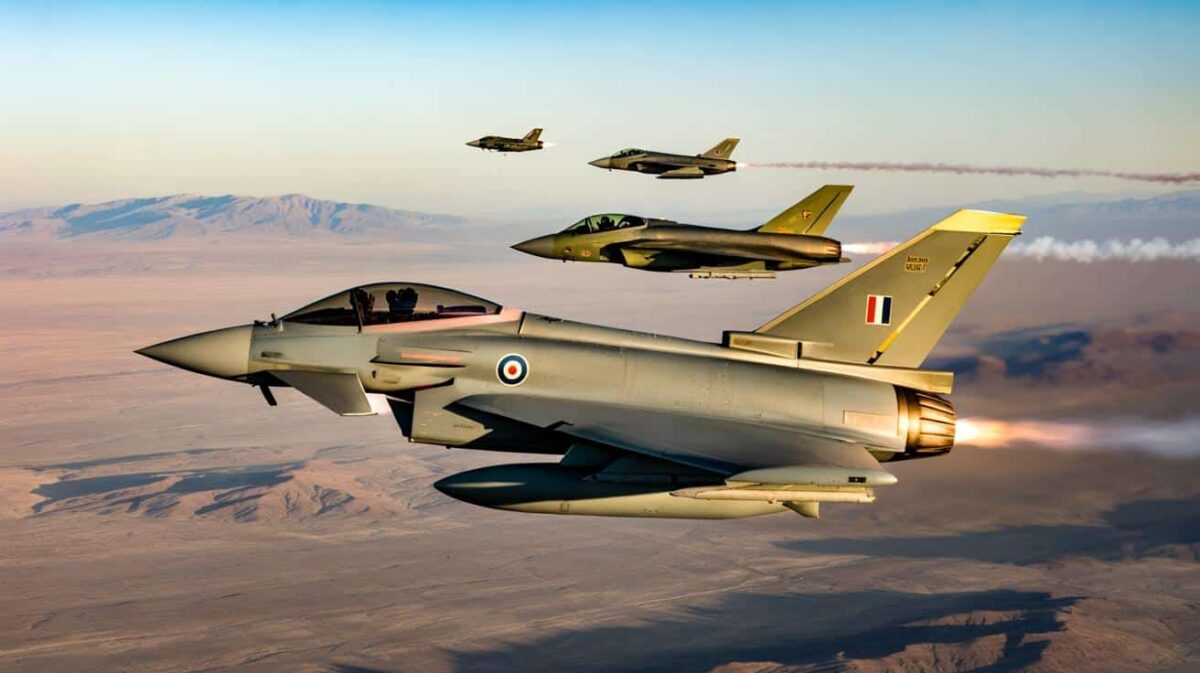
➡️ UK and Australia deploy Typhoons and F-35 fighters to U.S. for Red Flag 26 combat training
➡️ Saildrone, Lockheed to place missile launchers on naval drones
➡️ A new maker of passenger jets arrives: it’s not Chinese but Indian
➡️ Portugal to receive EU’s first drone carrier NRP D. João II in 2026 for Atlantic surveillance
➡️ The science is in: this is the most efficient and economical way to heat your home
Inside the Service Life Extension Program
The heart of Cheyenne’s overhaul was an Engineered Refueling Overhaul (ERO), a complex operation in which shipyard teams remove the submarine’s worn nuclear fuel and install a new core. Only a handful of highly specialised naval shipyards can carry out this work.
But refueling was just one of many major interventions. SLEP is structured as a multi-phase engineering effort touching almost every critical system on board.
- Nuclear propulsion: reactor refueling, testing and upgrades to key components.
- Combat systems: modern combat control suite aligned with frontline attack submarines.
- Sonar and sensors: improved processing power, better target tracking and detection ranges.
- Hull and structure: preservation work to maintain depth capability and structural safety margins.
- Habitability: refreshed living spaces and systems for a crew that may serve on board into the 2040s.
For Cheyenne, the Navy installed the AN/BQQ-10 sonar processing system and the AN/BYG-1 combat control system. These upgrades bring her in line with modern standards, allowing the submarine to work seamlessly with newer platforms and weapons, including Tomahawk cruise missiles and advanced torpedoes.
Cost, time and capability trade-offs
New Virginia-class submarines typically cost upwards of $3.5 billion each and can take seven years or more from contract award to fleet delivery. By contrast, a SLEP refueling overhaul requires a fraction of that budget and can be completed in significantly less time, assuming shipyards keep pace with schedules.
| Option | Approximate cost | Typical timeline | Added service life |
|---|---|---|---|
| New Virginia-class SSN | > $3.5 billion | ~7 years to delivery | Full 30+ year life |
| Los Angeles-class SLEP | Fraction of a new build | Roughly half the time | +10 to 15 years |
For planners looking at a tight budget and a rising submarine threat from the Chinese People’s Liberation Army Navy, that arithmetic is hard to ignore.
Industrial gains at Portsmouth Naval Shipyard
The Cheyenne overhaul also became a test case for the Navy’s much-talked-about push for “industrial reform.” Portsmouth Naval Shipyard delivered the refit almost two months ahead of its rebaselined schedule, a notable achievement in a system often criticised for delays and maintenance backlogs.
That performance matters beyond a single hull. Submarine availability has been dragged down in recent years by congested shipyards, older infrastructure and workforce shortages. Early delivery of Cheyenne shows what is possible when schedules hold and projects run close to plan.
Faster turnarounds at public shipyards translate directly into more submarines at sea, at a time when commanders say every hull counts.
Which boats could be next?
Following Cheyenne’s success, Navy planners are examining other “688 Improved” boats as candidates for similar treatment. These later Los Angeles-class submarines were built with quieter machinery and, in many cases, vertical launch systems for cruise missiles, making them especially valuable to keep in service.
Internal assessments reportedly point to as many as five additional submarines with strong maintenance track records and good structural condition. Their selection will depend largely on funding decisions in the 2026 defence budget. If approved, these refits could add several more attack submarines to the active force in the early 2030s.
What a refueled attack submarine brings to the table
Los Angeles-class submarines are multi-mission platforms, designed to operate independently in contested areas for long periods. With a fresh core and upgraded systems, Cheyenne can again take on a range of tasks:
- Tracking and, if required, engaging enemy submarines and surface ships.
- Launching Tomahawk cruise missiles against land targets from stealthy positions offshore.
- Conducting intelligence, surveillance and reconnaissance patrols in sensitive regions.
- Delivering and recovering special operations forces close to hostile coastlines.
Cheyenne’s compact reactor design and low acoustic signature make her difficult to detect. The upgraded sonar and processing systems should improve her ability to spot rival submarines first, a decisive edge in any underwater confrontation.
Key terms and concepts worth unpacking
The jargon around nuclear submarines can be dense, so a few phrases are central to understanding why Cheyenne’s overhaul matters:
- Fast attack submarine (SSN): A nuclear-powered boat designed for speed, agility and offensive operations against ships, submarines and land targets.
- Service Life Extension Program (SLEP): A structured effort to extend a platform’s operational life, typically combining deep maintenance, refueling and technology upgrades.
- Engineered Refueling Overhaul (ERO): A major maintenance period where the nuclear reactor is refueled and the submarine undergoes substantial repair and modernisation.
Thinking of SLEP as an overhaul on the scale of rebuilding an airliner, rather than just changing the tyres, gives a useful mental picture: the structure stays, but almost every critical system is inspected, replaced or upgraded.
Strategic scenarios and future pressures
In a crisis over Taiwan or a confrontation in the North Atlantic, attack submarines like Cheyenne would likely be among the first U.S. assets sent forward. Their stealth allows them to operate inside contested missile envelopes where surface ships face higher risks.
Analysts often model future scenarios where U.S. and allied forces must monitor a growing Chinese submarine fleet while also keeping an eye on Russian activity in the Arctic and Atlantic. In those simulations, raw submarine numbers matter. Each additional hull gives commanders more flexibility to maintain continuous patrols, escort carrier groups and monitor chokepoints such as the Greenland-Iceland-UK gap or the Luzon Strait.
There are trade-offs, of course. Extending older submarines means sailors will serve on designs that date back to the 1970s and 1980s, even if the electronics are new. Training pipelines and maintenance plans must adapt to fleets that mix several generations of boats. And shipyards juggle SLEP work alongside construction of Columbia-class ballistic missile submarines and new Virginia-class attackers.
Still, Cheyenne’s return suggests the Navy sees value in squeezing every safe year of service from proven hulls while waiting for newer designs to arrive in greater numbers. As lawmakers debate future budgets and the industrial base stretches to build more boats, the success of this first Los Angeles-class refueling overhaul will weigh heavily on decisions about how many others follow her back to sea.