Many households hesitate between gas, heat pumps, pellets or fancy “green” systems, while installers defend their own favourites. A new 2024 study from a German research team finally compares these options head‑to‑head, using hard numbers instead of marketing claims.
A rare study that actually compares heating systems fairly
Most advice on heating comes from manufacturers, salespeople or quick online calculators. This new German study took a very different route: simulate 13 different heating systems in the same typical two‑storey house and measure both cost and climate impact over time.
The researchers combined two powerful tools:
- Life‑cycle assessment (LCA): tracks environmental impact from manufacture to end of life, including CO₂ emissions and resource use.
- Net present value (NPV): adds up all costs over the system’s lifetime, from installation to maintenance and energy bills, then adjusts them to today’s money.
They did not just look at today’s prices. The model included future changes in energy tariffs and the expected evolution of Germany’s electricity mix, which is gradually shifting towards more renewables.
The winning heating system is the one that stays cost‑effective and low‑carbon across many possible futures, not just in this year’s bill.
The team factored in:
- Initial purchase and installation costs
- Annual energy consumption
- Maintenance and servicing
- CO₂ emissions and broader environmental impact
- Use of natural resources, such as gas, biomass and electricity
This rigorous comparison produced a clear overall winner, and a few surprises.
The standout winner: air‑to‑water heat pump plus solar panels
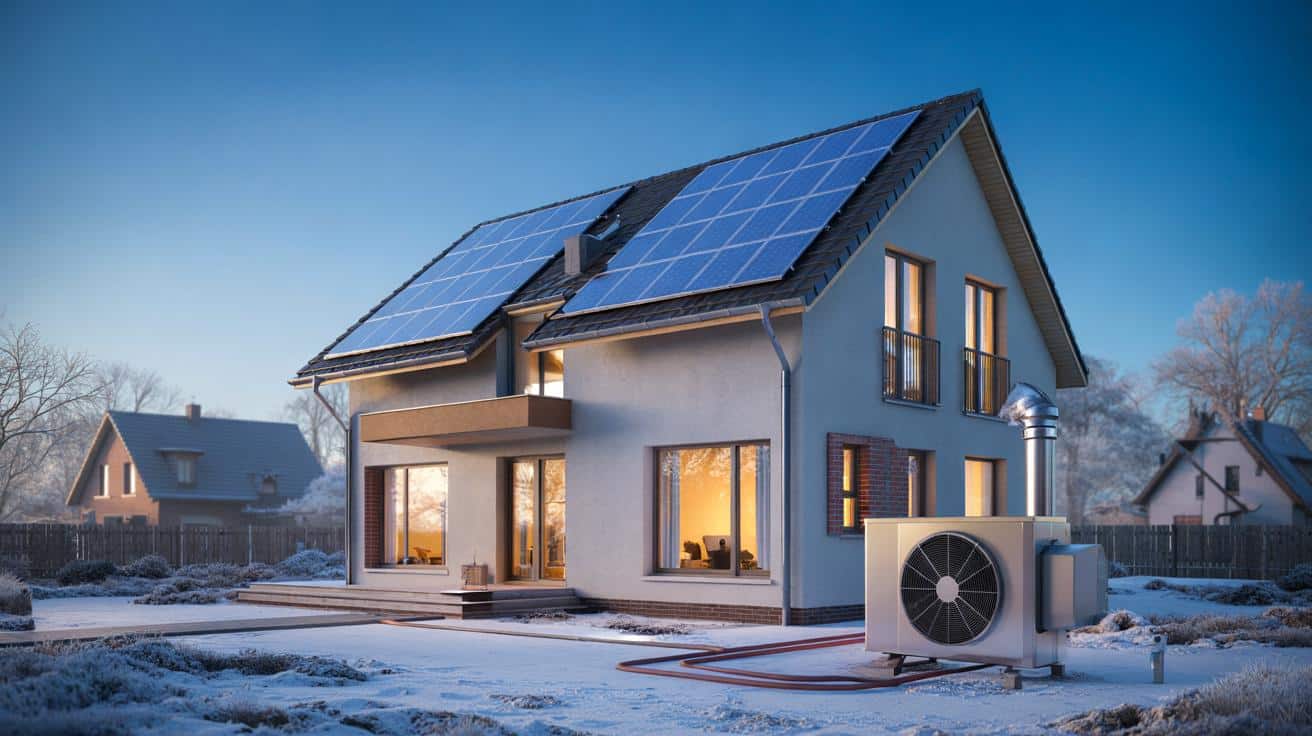
At the top of the ranking comes a combination that many energy experts have been quietly supporting for years: an air‑to‑water heat pump paired with rooftop solar photovoltaic (PV) panels.
In the study, this duo delivered an environmental impact 17% lower than a modern gas boiler used as the reference system. At the same time, it cut overall costs by around 6% over the system’s lifetime.
➡️ U.S. Navy completes first Los Angeles-class fast attack submarine refueling overhaul
➡️ UK and Australia deploy Typhoons and F-35 fighters to U.S. for Red Flag 26 combat training
➡️ The day I built a self-watering system from rubbish I never thought I’d keep
➡️ A new maker of passenger jets arrives: it’s not Chinese but Indian
➡️ “I’m 65 and felt tired after short walks”: the breathing pattern that limited endurance
➡️ War in Ukraine: Crimea attacked as Russians lose MiG-29 fighter jet and advanced radar
➡️ Saildrone, Lockheed to place missile launchers on naval drones
➡️ “I make it every Sunday in winter”: the potato–Brussels sprouts gratin that won over my whole family
Even in the researchers’ worst‑case scenarios, the heat pump plus PV option still beat many alternatives on both climate and cost.
Why this combo works so well
The air‑to‑water heat pump extracts heat from outside air and transfers it into the water that feeds radiators or underfloor heating. For every unit of electricity it uses, it can deliver multiple units of heat, making it far more efficient than direct electric heaters.
When that electricity is partly produced on site by PV panels, the equation improves again. The household buys less power from the grid and relies more on its own low‑carbon electricity at midday, when the sun is strongest.
The researchers note that if homeowners manage their consumption smartly – timing hot water production or pre‑heating rooms when the sun is shining – the system’s performance can improve further. Simple tweaks like using a smart thermostat or shifting washing cycles to sunny hours can increase self‑consumption of solar power and cut bills.
The surprise runner‑up: wood gasification boiler
Right behind the heat pump and solar combination is a less talked‑about technology: the wood gasification boiler. This system burns firewood in a way that optimises combustion, producing a hot, clean flame and higher efficiency than a classic log boiler.
In the study, this option delivered an environmental impact 42% lower than the gas boiler reference. The downside is cost: it remains around 20% more expensive over its lifetime.
When the wood comes from sustainably managed forests, the carbon impact of a gasification boiler can be remarkably low compared with gas.
The logic is that trees absorb CO₂ while they grow. When the wood is burnt, the carbon goes back into the atmosphere, but the cycle can be close to neutral if the forest is properly renewed. The study treats this carefully, stressing that the “renewable” label only makes sense with responsible forestry and local supply.
The systems that disappoint despite a green image
Not all “eco‑branded” technologies live up to their reputation in this detailed comparison. Two options in particular perform poorly on eco‑efficiency, once both cost and environmental impact are counted:
- Pellet boiler combined with solar thermal panels
- Heat pump coupled with an ice storage system
Both setups sound sophisticated and low‑carbon. Yet the study finds their complexity and high investment costs are not matched by equivalent gains in emissions or energy savings. Maintenance can be more demanding, and the hardware itself requires more materials and manufacturing effort.
For pellet boilers with solar thermal, the interaction between the two systems is not always smooth. Oversizing or under‑using the solar part reduces the expected benefit. With ice storage, the engineering is impressive but the real‑world advantage over a well‑designed standard heat pump remains limited in the scenarios tested.
Conventional gas boilers fall behind
The traditional gas boiler, still the most common heating system in many European homes, does achieve relatively low running costs in the study. Gas remains, for now, a comparatively cheap fuel per unit of heat.
Yet when the full climate and resource footprint is counted, gas boilers suffer. Among all 13 systems, they produce some of the highest greenhouse gas emissions, even when paired with solar thermal panels for hot water.
Gas wins on short‑term bills in some cases, but loses once climate costs and future risk of rising fuel prices are taken into account.
With many governments planning tighter climate rules and possible carbon pricing, the affordability advantage of gas looks fragile over the coming decades.
How the main options stack up
| System | Lifetime cost vs gas boiler | Environmental impact vs gas boiler |
|---|---|---|
| Air‑to‑water heat pump + PV | About 6% lower | About 17% lower |
| Wood gasification boiler | About 20% higher | About 42% lower |
| Pellet boiler + solar thermal | Higher | Relatively weak gain |
| Heat pump + ice storage | Higher | Poor eco‑efficiency |
| Gas boiler (reference) | Baseline | Highest emissions range |
What this means for a typical homeowner
The study is based on German data, but the general lessons speak to households across Europe, the UK and North America. In climates with cool winters and increasingly cleaner electricity grids, a standard air‑to‑water heat pump combined with solar PV tends to offer one of the best trade‑offs between cost and carbon.
That does not mean it suits every single home. Old, badly insulated houses may require additional upgrades. Rural households with cheap access to logs from sustainable forests might find a wood gasification boiler attractive, especially if they accept the more hands‑on operation.
For many urban homeowners, though, a heat pump plus PV offers a relatively simple route: one main unit outside, one indoor unit, and a roof that works harder for the household wallet.
Key concepts worth understanding before choosing
Before making a decision, a few terms from the study are useful to grasp:
- Coefficient of performance (COP): how many units of heat a heat pump delivers for each unit of electricity used. A COP of 3 means 1 kWh of electricity becomes 3 kWh of heat.
- Self‑consumption: the share of solar electricity that is used directly in the home, instead of being exported to the grid. Higher self‑consumption usually improves the economics of PV.
- Life‑cycle emissions: total greenhouse gases released from manufacturing, installing, operating and eventually disposing of a heating system.
Understanding these ideas helps compare quotes and avoid being swayed only by headline efficiency figures or upfront price tags.
Practical scenarios: what changes if you add insulation?
The German researchers focused on heating technologies, but the numbers shift further once building fabric is improved. A well‑insulated semi‑detached house typically needs far less heat overall, which can allow smaller, cheaper units and smoother heat pump operation at lower flow temperatures.
Imagine two similar homes:
- House A installs a large gas boiler with no insulation upgrade.
- House B invests in loft insulation, window improvements and a modest heat pump with PV.
House B pays more upfront, but its running costs and emissions fall sharply every year. As gas prices and carbon constraints tighten, the gap grows wider. Even modest efficiency upgrades such as better thermostatic controls or sealing draughts can reinforce the advantage of a heat pump and solar combination.
Risks, trade‑offs and mixed solutions
No technology is risk‑free. Heat pumps require decent design and installation; poor sizing or badly set controls can damage efficiency. Wood‑based systems depend on sustainable supply and correct storage of fuel. Gas systems carry exposure to volatile fuel prices and climate regulation.
Some households may opt for mixed setups. A heat pump can handle most of the heating load, with a small existing gas boiler or log stove kept as backup for very cold spells. Solar PV can be paired not only with heating but also with electric vehicle charging or battery storage, spreading the benefit of the panels across several uses.
The data from Germany points strongly in one direction: combining an efficient electric heat pump with home‑grown solar power is emerging as the most balanced way to stay warm, save money and cut emissions over the long term.