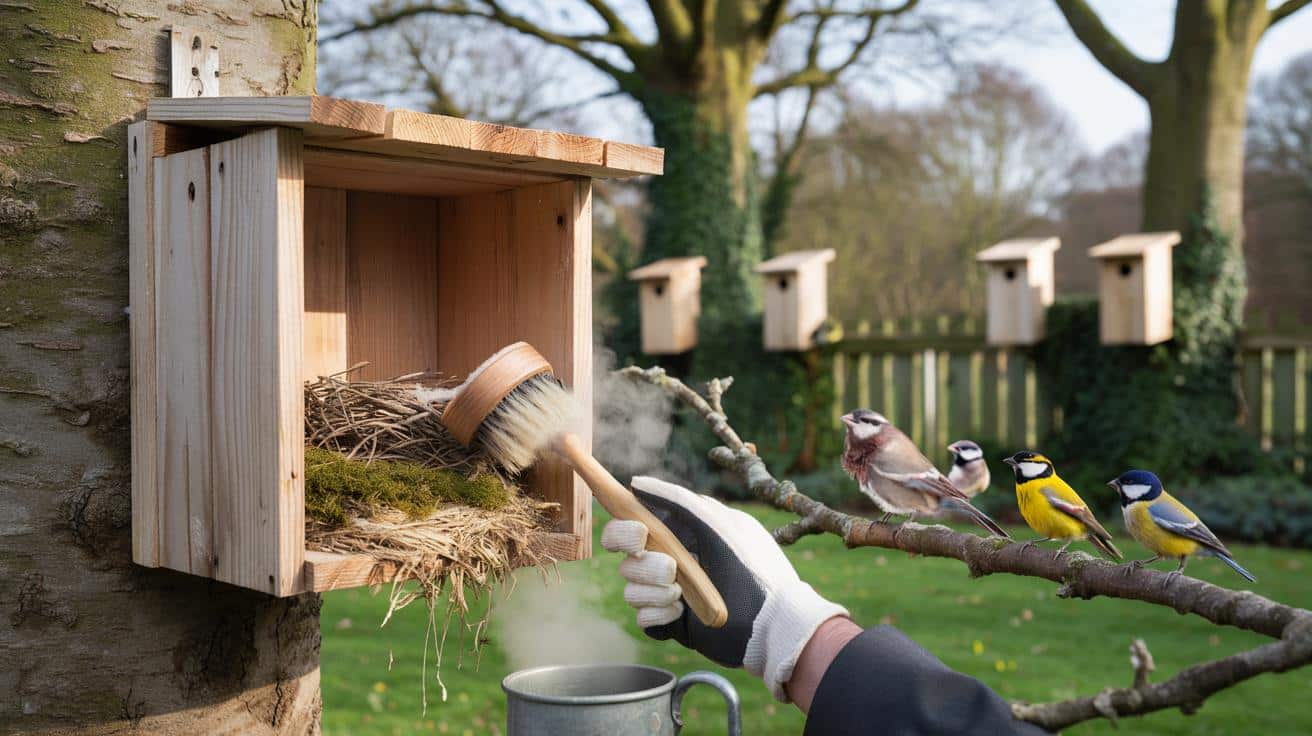
While many people assume nothing much happens in February, birds are already sizing up real estate, pairing up and inspecting every safe cavity they can find. What we do in our gardens during these last cold weeks can strongly influence which chicks even get a chance to hatch.
February is moving day for future bird parents
By mid-February, small hole‑nesting birds are no longer just visiting feeders. They are in full scouting mode. Blue tits, great tits, nuthatches, sparrows and redstarts all look for secure nooks that can shelter eggs and chicks from wind, rain and predators.
In natural woodlands, they would rely on old, hollow trees. In many suburbs and city edges, those trees are gone. That makes every nest box, shed gap or wall cavity a highly contested space.
By late winter, the nest box in your garden is no longer decoration. For a pair of small birds, it can mean the difference between breeding or giving up.
Ornithologists stress that timing matters. Leaving nest box work until late March often means the best territories are already claimed. Birds may turn to unsafe cavities in roofs, or skip breeding attempts in poorer years.
The crucial gesture: cleaning out last year’s nests
The action experts come back to every year is simple: thoroughly clean existing nest boxes in late winter. Last season’s nest looks cosy, but for young birds it is more like an infested mattress.
Old nesting material is often packed with fleas, mites and other parasites that survived the winter. Once a new brood hatches, these parasites multiply fast and can weaken chicks already under stress from cold or food shortage.
A few minutes with a stiff brush in February can prevent weeks of slow exhaustion for chicks in May.
How to clean a nest box without harming birds
- Open the box and remove all old nest material: moss, grass, feathers, droppings.
- Scrub the interior with a stiff brush to dislodge debris and parasite eggs.
- Rinse with very hot or boiling water to kill lingering bacteria and mites.
- Let the box dry completely in fresh air before re‑hanging it.
- Avoid bleach, detergents or pesticides, whose residues can poison adults and chicks.
Chemicals may seem like a shortcut, but even tiny traces on wood can irritate skin, damage lungs or build up on eggshells. Hot water and elbow grease are enough.
➡️ “At 63, I misunderstood my morning stiffness”: what my body needed instead
➡️ UK and Australia deploy Typhoons and F-35 fighters to U.S. for Red Flag 26 combat training
➡️ War in Ukraine: Crimea attacked as Russians lose MiG-29 fighter jet and advanced radar
➡️ The science is in: this is the most efficient and economical way to heat your home
Choosing the right nest box: size and material matter
If your garden has no nest boxes yet, late winter is the perfect time to put some up. But not every cute birdhouse in a garden centre will actually help birds.
Different species need different entrance sizes. The hole works like a security gate, keeping out larger, more aggressive birds and some predators.
| Entrance type | Typical species |
|---|---|
| 26–28 mm round hole | Blue tit, coal tit, marsh tit and other small tits |
| 32–34 mm round hole | Great tit, house sparrow, nuthatch |
| Semi‑open front | Robin, spotted flycatcher, redstart |
Wood is still the best material. Experts recommend untreated, fairly thick boards, such as larch, oak or cedar, at least 1.5 cm thick. This thickness gives insulation against both night frost and sudden spring heat.
Bright metal boxes can look trendy to humans, yet they often turn into ovens just as chicks are struggling to regulate their temperature.
Painted, decorative birdhouses in sharp colours often prioritise looks over function: gaps that let in rain, perches that help predators, roofs that lift off too easily. Functional designs may seem plain, but they match what birds actually need.
Positioning the box: orientation, height and safety
Even the best box becomes a trap if it is badly placed. Wind, rain and predators all shape how safe a nest will be.
Which way should the hole face?
In much of Europe and North America, storms and driving rain often come from the west. Ornithologists usually recommend orienting the entrance roughly east or south‑east.
- East or south‑east: morning sun warms chicks after a cold night.
- Avoid full south in exposed spots: risk of overheating on hot afternoons.
- Sheltered north‑east can work in very hot regions.
A slight forward tilt helps rainwater run off the entrance instead of dripping inside. That small angle can prevent damp nests, mould and chilled chicks.
How high should the box be?
For common garden birds, around 2–3 metres above the ground is a practical compromise. This height puts nests out of easy reach for cats and curious children, yet still allows you to reach the box with a small ladder for yearly cleaning.
Avoid fixing boxes where a branch or fence gives predators an easy launchpad to the hole. Cats and squirrels use nearby branches like assault platforms.
Think like a predator for a moment: if a cat could sit level with the entrance and pounce in one jump, the spot is wrong.
Why acting now boosts local biodiversity
Putting up or refreshing nest boxes in February does more than help a few cute chicks. It supports a whole web of garden life.
Once birds choose a box, they start establishing a territory around it. That means regular visits to your trees, hedges and vegetable beds. A single tit family can eat thousands of caterpillars, beetle larvae and aphids while feeding their young.
That insect appetite offers a natural form of pest control. Fewer caterpillars on fruit trees or brassicas means less pressure to reach for pesticides. Gardens that host active birdlife often see a steadier balance between insects and their predators.
A weekend checklist for bird‑friendly gardens
For anyone wondering where to start, ornithologists suggest breaking the task into small, practical steps:
- Empty and scrub any existing nest boxes.
- Replace damaged boxes with sturdier, untreated wooden ones.
- Check orientation and tilt of all boxes already in place.
- Trim only the branches that give predators access to entrances.
- Keep a small feeding area going nearby, without putting food right next to the nest.
None of these jobs require specialist skills or expensive tools. Yet, taken together, they create safer nurseries for several species at once.
Key terms bird lovers keep mentioning
Articles and bird guides often refer to “cavity‑nesting species”. This simply means birds that breed inside a hole: natural tree hollows, rock crevices or artificial boxes. Many garden favourites fall into this group.
Another recurring term is “parasite load”. This describes how many parasites a bird or nest carries. High parasite loads drain energy from chicks, making them easier targets for disease and predation. A cleaned box helps keep this load low at the start of the breeding season.
Real‑life scenarios that show the impact
Picture two neighbouring gardens. In one, a neglected box still holds a damp, parasite‑ridden nest. In the other, the box has been emptied, scalded with hot water and rehung facing east.
Both attract a pair of blue tits. In the dirty box, chicks hatch weaker and spend more energy fighting irritation and blood loss from mites. Several fail to fledge. Across the fence, in the clean box, chicks spend their energy growing and maintaining body heat. More of them leave the nest successfully and join the local breeding population.
The difference between those two gardens came down to a ten‑minute clean in February.
For anyone who enjoys birdsong with their morning coffee, that brief winter task is a small, concrete way to tip the odds in favour of life. And when fledglings line up on a summer branch, fluttering their wings and shouting for food, the link between those quiet February minutes and that noisy family feels very direct.