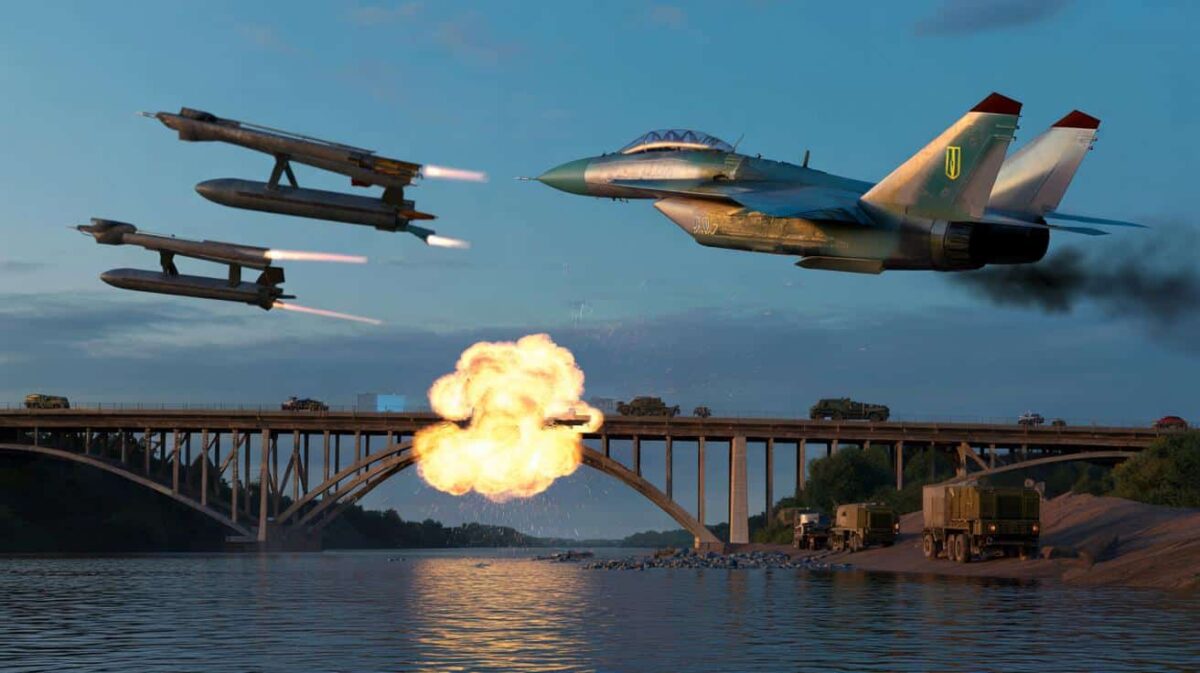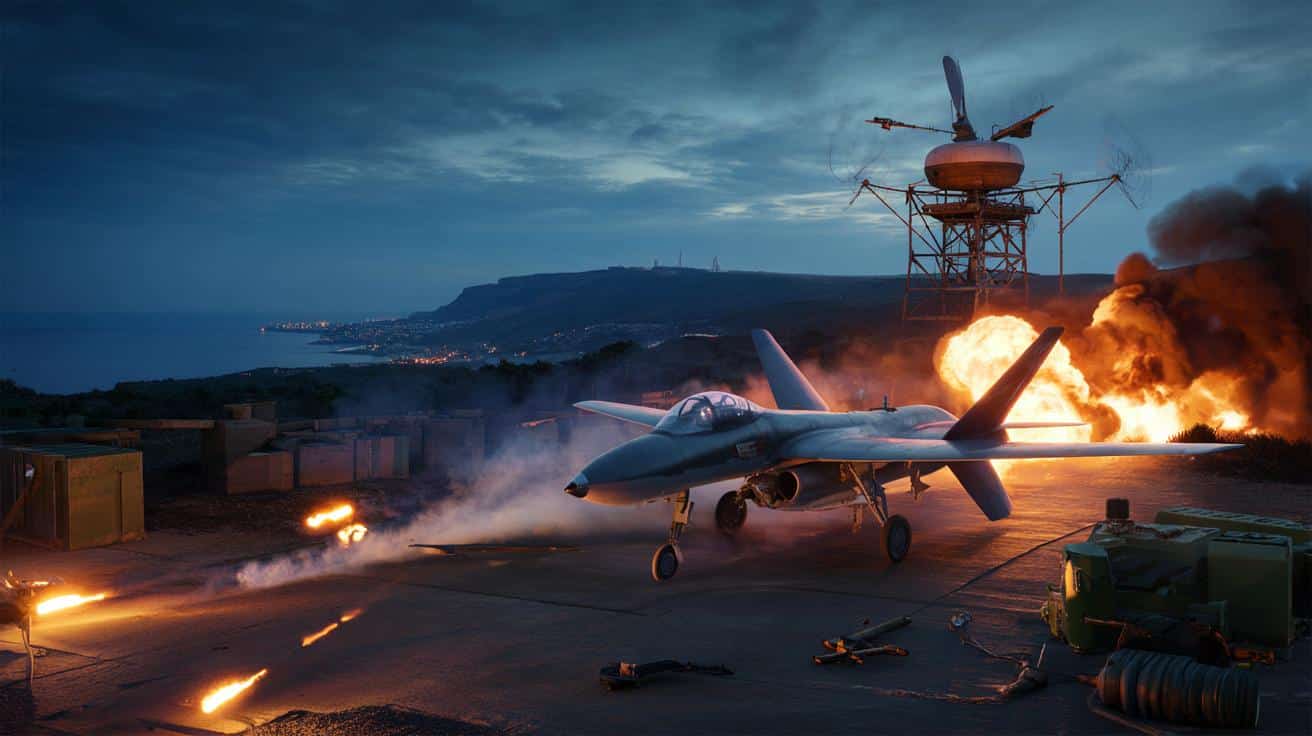
The latest strikes, claimed by Kyiv’s military intelligence service, hit the Russian-occupied peninsula where Moscow stores jets, radars and key logistics. This time, Ukraine says a MiG‑29 fighter and a sophisticated radar system paid the price.
Ukrainian drones strike deep into occupied Crimea
Ukraine’s defence chiefs released new footage this week that they say shows a drone slamming directly into a Russian MiG‑29 fighter jet stationed in Crimea.
The clip, shared by the Main Directorate of Intelligence (known by its Ukrainian acronym GUR) on 3 December, appears to come from the onboard camera of a long-range attack drone. The image stabilises over a grounded fighter aircraft, then cuts at the moment of impact.
Ukrainian intelligence claims the strike destroyed a MiG‑29 at Kacha airbase near Sevastopol, a key hub for Russian air operations over the Black Sea.
The MiG‑29, originally a Soviet-designed air superiority fighter, remains one of the backbone aircraft of Russia’s tactical aviation. Analysts estimate the cost of a single modernised MiG‑29 at around €15 million, a painful loss at a time when Moscow is already rotating aircraft to manage wear and tear from intensive combat sorties.
According to the GUR, the attack on Kacha was only part of a broader operation carried out the same night across Crimea.
Advanced Irtysh radar reportedly hit near Simferopol
Alongside the claimed MiG‑29 strike, Ukrainian officials say another drone targeted an Irtysh radar system in the Simferopol area, in the centre of the peninsula.
The Irtysh system is described by Russian sources as a modernised radar platform used for tracking aircraft and guiding air defences. Knocking out such equipment can create blind spots in Russia’s layered air defence grid.
GUR officials boasted that their forces are “systematically neutralising” Russian air defences over Crimea by hitting radars, surface-to-air missile batteries and now combat aircraft.
➡️ A grave rewrites history: the first human gold jewellery was here
➡️ These major cities are sinking: why their disappearance now looks inevitable
➡️ The science is in: this is the most efficient and economical way to heat your home
➡️ What is really the most efficient and energy‑saving space heater? Here’s the verdict
➡️ Germany pressing Belgium on frozen Russian assets
➡️ UK and Australia deploy Typhoons and F-35 fighters to U.S. for Red Flag 26 combat training
➡️ “I make it every Sunday in winter”: the potato–Brussels sprouts gratin that won over my whole family
Military observers point out that these assets are not easily replaced. Russia can move some systems from other regions, but doing so risks thinning its defences along other fronts, from the Kursk region to the Black Sea coast.
The ‘Ghosts’ unit and long-range drone warfare
The operation was reportedly carried out by the GUR’s special forces unit known as the “Ghosts”. Ukrainian outlet The Kyiv Independent, citing defence sources, said the team used long-range drones capable of flying hundreds of kilometres behind enemy lines.
- Unit: “Ghosts” special forces under GUR
- Targets: MiG‑29 fighter at Kacha airbase; Irtysh radar near Simferopol
- Method: Long-range kamikaze drones with onboard cameras
- Location: Occupied Crimea, a central battleground in the wider war
These “kamikaze” drones are designed for one-way missions. They carry explosives instead of returning home, trading survivability for range and payload. For Ukraine, they offer a relatively low-cost way to harass Russian forces far from the frontline.
Asymmetric war: numbers versus ingenuity
The strike highlights the asymmetry that has defined much of the conflict. Russia commands a far larger standing army and deeper stockpiles of missiles, artillery and aircraft.
Estimates cited by Ukrainian officials and Western analysts place Russia’s military personnel involved in the war at around 1.3 million, including regular forces and mobilised reservists. Ukraine, even when counting territorial defence units and volunteers, operates with significantly fewer troops and a much smaller air force.
Unable to match Moscow plane-for-plane or missile-for-missile, Kyiv has poured effort into what some officers now call “dronautics”: the rapid development and mass deployment of unmanned systems.
From cheap quadcopters to long-range strike drones, Ukraine aims to offset Russia’s numerical advantage with precision and creativity.
Ukrainian units routinely customise civilian drones, add improvised munitions and programme complex flight paths to evade jamming and radar. Volunteer groups and private companies provide designs, spare parts and battlefield feedback in a fast-moving ecosystem that Russia has struggled to fully counter.
Crimea’s strategic weight for both sides
Crimea sits at the heart of this struggle. Russia annexed the peninsula in 2014 and has since turned it into a heavily fortified bastion.
Sevastopol hosts the Black Sea Fleet, including warships used to launch cruise missiles at Ukrainian cities. The region also contains airbases such as Kacha, logistics hubs, ammunition depots and radar sites spreading a defensive umbrella across southern Ukraine and the sea.
For Kyiv, every successful strike there carries both tactical and political weight. Destroying aircraft and radars reduces the pressure on Ukrainian forces in the south. It also signals to the Russian public that occupied Crimea, which the Kremlin presents as permanently Russian, remains under threat.
How drone attacks shake Russian air defences
Repeated drone raids on Crimea place continuous stress on Russian air defence crews. They must track, identify and engage small, often low-flying objects that are hard to spot and even harder to hit consistently.
Each interception uses valuable missiles or artillery rounds. Each failure risks the loss of an expensive aircraft, radar station or fuel depot. Engineers then need to inspect damaged sites, move surviving systems and adjust the defensive layout.
| Ukrainian drone advantages | Russian challenges |
|---|---|
| Lower cost per unit | High-value equipment at risk |
| Flexible launch locations | Need to protect wide area of Crimea |
| Harder to detect on radar | Radar and jamming systems stretched thin |
| Rapid design and software updates | Slower procurement and modernisation cycles |
Defence experts say even partial damage to a radar like the Irtysh can create gaps that Ukrainian planners might exploit later with cruise missiles, anti-ship weapons or new drone swarms aimed at higher-value infrastructure.
Psychological and political signals
Beyond material losses, operations in Crimea carry a psychological charge. For Russian pilots, the idea that their aircraft can be destroyed while parked deep in rear bases raises anxiety levels before each sortie.
For Ukrainian civilians, especially those under regular missile attack, footage of a drone taking out a Russian jet offers a rare sense of agency and retribution. Kyiv’s intelligence service is well aware of this and often publishes carefully edited videos for maximum impact.
Publicly claiming strikes in Crimea allows Ukraine to show that Russian occupation is neither permanent nor safe.
Such messaging plays into Kyiv’s long-term goal: convincing Western partners that sustained support can push Russian forces into a more vulnerable position, even without a rapid breakthrough on the frontline.
Key terms and what they mean on the battlefield
The conflict has introduced a technical vocabulary that can be confusing. Two terms linked to this latest operation are worth breaking down.
MiG‑29: A twin-engine fighter designed in the late Soviet era, built for agile manoeuvring and short-range dogfights. Modern Russian versions carry guided missiles and can perform ground-attack roles. While not Russia’s most advanced jet, each loss chips away at a fleet already stretched across multiple fronts.
Irtysh radar: A family of radar systems used for airspace monitoring. Such radars help detect approaching aircraft and missiles, then pass information to air defence batteries. Destroying them forces Russian units to operate with less accurate data or to rely on older, less capable systems.
Possible next steps and wider risks
If Ukraine continues to hit high-value targets in Crimea, Russia is likely to respond with intensified strikes on Ukrainian cities and energy infrastructure. That cycle raises the risk of broader escalation, especially if debris falls near NATO territory or if Russian assets in the Black Sea are targeted more aggressively.
At the same time, Ukrainian commanders may experiment with combined tactics: using drones to overwhelm radars, followed by precision missiles aimed at command centres or ammunition hubs. Such layered attacks demand constant adaptation from Russian forces and could reshape the balance of power over the Black Sea corridor.
For civilians across the region, the growing role of drones brings mixed consequences. On one hand, cheaper precision strikes can reduce the need for large-scale bombardments that level entire districts. On the other, persistent drone activity keeps air-raid sirens wailing and forces communities to live under the permanent threat of sudden explosions, day or night.